In Conversation with Thypoch | Amirhossein Darafsheh: Exploring Street Photography and Simera 35mm f/1.4
In Conversation with Thypoch | Amirhossein Darafsheh: Exploring Street Photography and Simera 35mm f/1.4
Interview
Photography
Edit Notes:
Street photography has a certain connection with the essence of Thypoch: authenticity, exploration, and infinity . We are honored to interview a professional photographer from Iran: Amirhossein Darafsheh. His street photography focuses on storytelling, with each photo being a sentence in a larger narrative. He shares how he chooses subjects amid the hustle and bustle of the streets and how he balances capturing spontaneous moments with imposing his artistic vision onto the scene.
Personal Information
1. Thypoch: What is your profession? Where are you located?
Amirhossein Darafsheh: I am a photographer and graphic designer based in Tehran, Iran. My work focuses on combining visual storytelling with a graphic sensibility, often using the vibrant yet complex urban environment of Tehran as a canvas.
2. Thypoch: What does street photography mean to you personally? How do you define its boundaries?
Amirhossein Darafsheh: To me, street photography is an exploration of raw, unarranged moments in life . It is the art of finding beauty in the mundane—a way to connect with the world and document its rhythms. In my photography, I strive to capture the essence of everyday life.
The boundaries of street photography are fluid; while it thrives in public spaces, its essence lies in authenticity and human connection, rather than strict definitions of place or subject. However, in Tehran, street photography is not simply a matter of picking up a camera and stepping outside. In many parts of the city, photography is seen as illegal, and people are often reluctant to be photographed. Street photography in Tehran is a direct confrontation with risk, but it is this challenge that fuels my passion.
3. Thypoch: What draws your attention to a specific moment or subject amid the noise of the streets?
Amirhossein Darafsheh: I am captivated by contrasts—light and shadow, motion and stillness, hope and despair. Often, it is a fleeting interaction, an expression, or a detail that tells a larger story. I seek those irreplaceable moments, poetic or surreal in their ordinariness.
4. Thypoch: How do you balance capturing spontaneous moments with injecting your artistic perspective into the scene?
Amirhossein Darafsheh: It is a delicate balance between observation and intention. While I strive to let moments unfold naturally, my artistic perspective shapes how I compose, shoot, and interpret the scene. It is about creating a dialogue between reality and possibility, respecting the integrity of the moment while infusing my own viewpoint.
5. Thypoch: What role does storytelling play in your work?
Amirhossein Darafsheh: Narrative is at the core of my work. Each photograph is like a sentence in a larger story, whether about the character of the city, the resilience of its people, or the subtle drama of everyday life. I aim to evoke curiosity and emotion, allowing viewers to imagine the stories behind the frame. Living in Tehran, a city with a tumultuous and eventful history, I find that photographing here is itself an act of documenting history unfolding.
6. Thypoch: How do you choose your locations? Do they hold significant meaning for your narrative, or are they purely for visual appeal?
Amirhossein Darafsheh: I choose shooting locations based on intuition as well as careful consideration. Sometimes it is a place that resonates with the story I want to explore—a street imbued with historical significance or a bustling market. Other times it is purely visual attraction—the play of light, geometry, or textures captivates me. However, in Tehran, the choice of location is often a cautious decision influenced by its legality and level of risk. This city and its geography require a unique perspective, making it both a challenge and a privilege.
7. Thypoch: Who or what has influenced you the most on your street photography journey?
Amirhossein Darafsheh: The city of Tehran itself is the most significant influence on me. Its contrasts—chaotic yet poetic, harsh yet tender—reflect the complexities of life and provide endless inspiration. Tehran and all of Iran are places that are not easily accessible to every photographer, but for me, their challenges have deepened my connection to this work.
Among other influences, I draw inspiration from legendary street photographers like Henri Cartier-Bresson, Joel Meyerowitz, Saul Leiter, Garry Winogrand, and Alex Webb. Their ability to capture the complexities of life with depth and artistry has profoundly resonated with me.
When discussing my favorite photographers, I cannot help but mention the late Abbas Kiarostami, my revered mentor. Although he was primarily a minimalist photographer known for his evocative natural imagery, attending his film-making workshop in 2008 was a transformative experience. He taught me a way of observing the world that forever altered my perspective. His influence extends far beyond technical aspects; he taught me how to feel and interpret the world through the lens, for which I am eternally grateful.
A Story with Thypoch
1. Thypoch: What is your overall impression of Thypoch?
Amirhossein Darafsheh: My overall impression of Thypoch is very positive. The lenses they provided last year have become an essential part of my work—so essential that they haven't left my camera since. The workmanship is excellent, and the image output has a unique style that I greatly enjoy. It feels like a tool that understands the needs of photographers, enhancing not only the technical quality but also the artistic possibilities of my work.
I had the opportunity to experience Thypoch lenses almost from the beginning, before they were officially available for sale, and I was privileged to witness the growth and success of this brand. Seeing their lenses, including the 50mm, 35mm, and 28mm models, recognized for their outstanding quality brings me immense satisfaction. What excites me even more is that renowned photographers now choose Thypoch lenses over Leica lenses—which speaks volumes about their craftsmanship and performance.
2. Thypoch: What are your expectations for the future of Thypoch?
Amirhossein Darafsheh: I believe Thypoch has the potential to establish a leadership position in the photography industry through continued innovation and refinement of their already outstanding lenses. Witnessing the growth of this brand and seeing their products appreciated globally by the photography community is incredibly thrilling.
I hope Thypoch can continue to expand their product line while maintaining the high standards they have set. Their lenses are already catering to the needs of many styles, but further R&D could solidify their position as the go-to brand for photographers seeking versatility and creative freedom. If they stay true to their vision and the needs of photographers, I firmly believe their upward trajectory will continue.
Thypoch: What is your most memorable encounter or reaction while doing street photography with the Simera 35mm f/1.4?
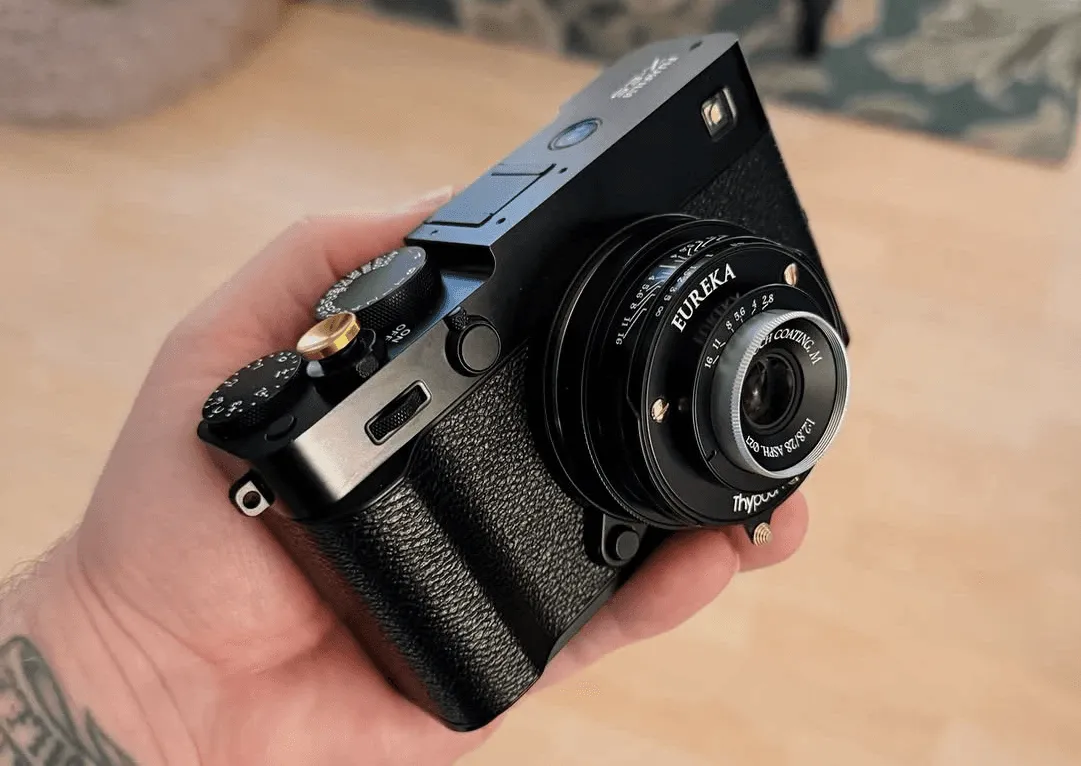
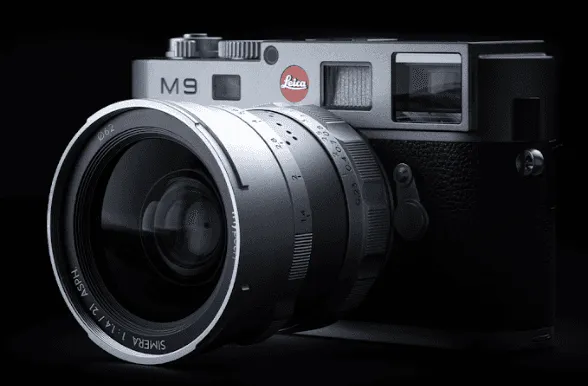
Amirhossein Darafsheh: The Simera 35mm f/1.4 lens is always intriguing due to its vintage design. Once, while shooting in a park, an elderly gentleman approached me and began reminiscing about his days using a film camera. He was fascinated by how the lens looked like it was from decades ago, but in reality, it was a product of modern technology.
This sparked a long conversation about photography across generations, and he shared some of his past experiences as an amateur photographer. Moments like these make Simera 35mm f/1.4 not just a photography tool but a bridge connecting people through a shared love of craftsmanship.
3. Thypoch: Please provide three photos taken with Thypoch lenses and the stories behind them.
Amirhossein Darafsheh: Picking my favorite photos from my work is never easy, but there are three from the past year that left a lasting impression. Each one represents the essence of my favorite street photography: capturing fleeting, irreplaceable moments.
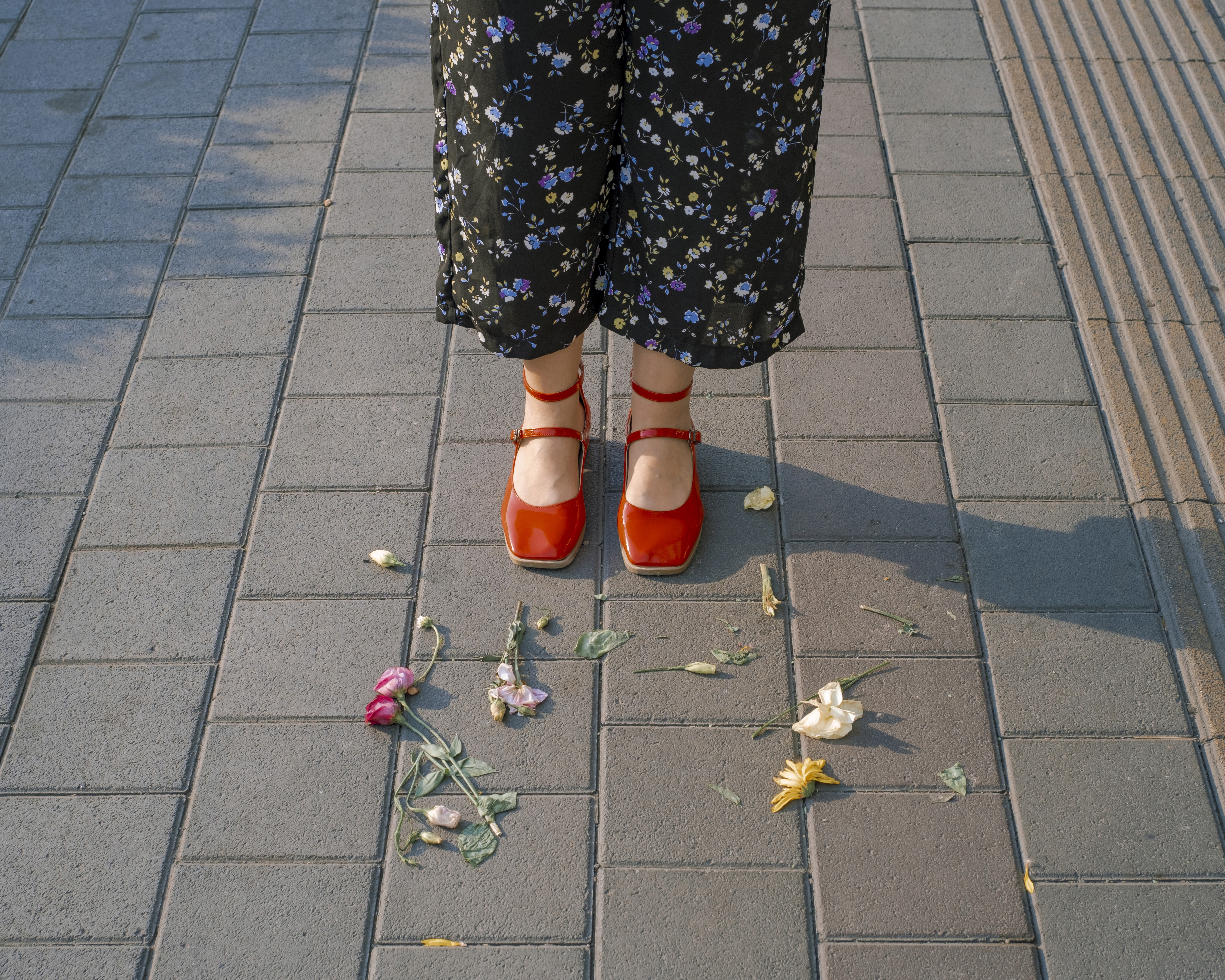
Red Shoes (Fujifilm X-pro3 + Simera 35mm f/1.4)
This photo captures a quiet yet powerful moment, where chaos and simplicity coexist. The striking red shoes contrast vividly with the flowers scattered on the ground, telling an open-ended story. It is a brief, fragile moment in the mundane—a scene that existed for only a short while and can never be replicated. Discovering and preserving such fleeting beauty is a goal I tirelessly pursue in my work.
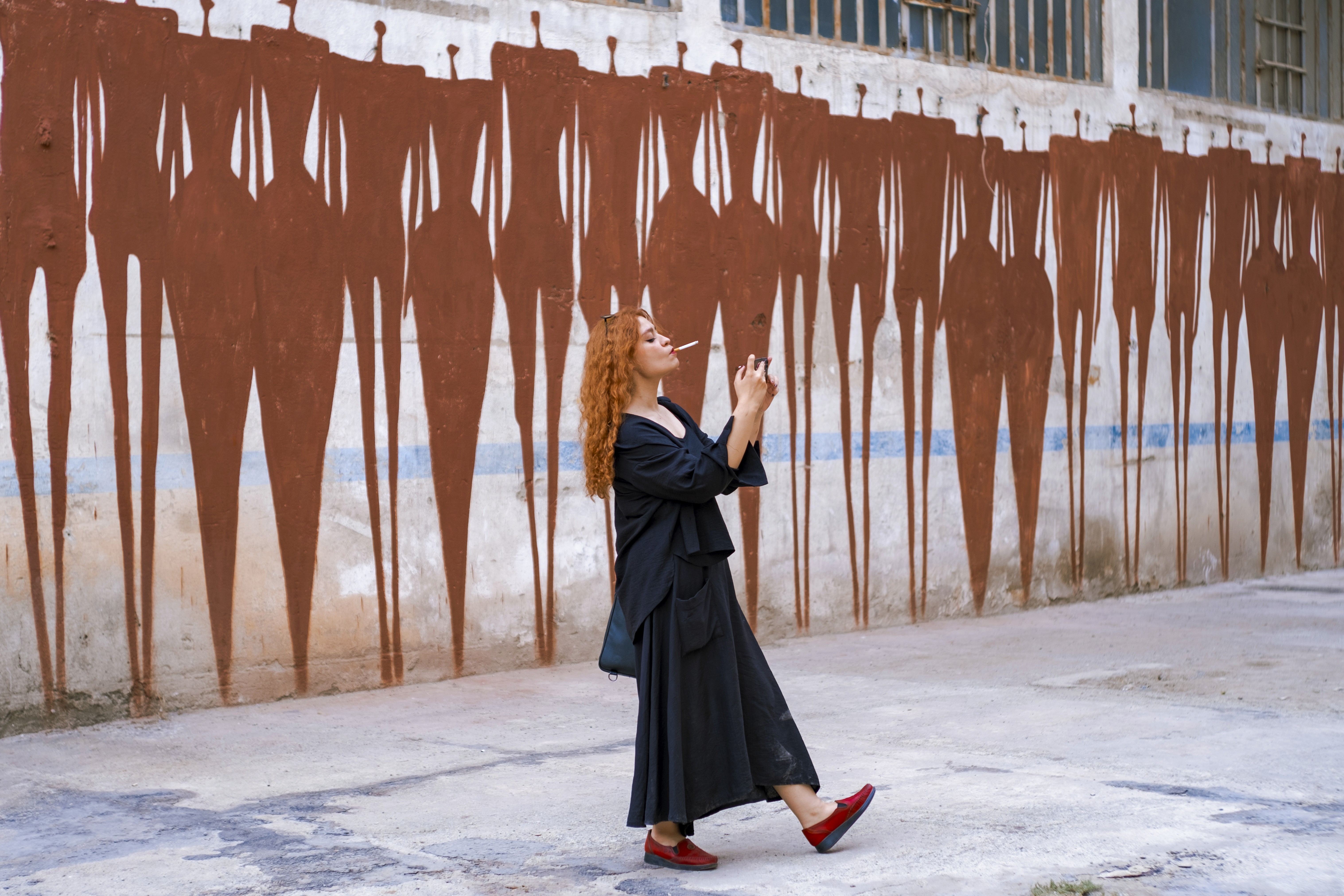
Red Lady (Fujifilm X-pro3 + Simera 35mm f/1.4)
This photo features a red-haired woman in motion, posing in front of a dramatic wall composed of abstract figures. Her action harmonizes perfectly with the mural, creating a composition that feels almost accidental yet harmonious. It is that rare and unrepeatable moment, where everything just fits—the right place, the right time. This photo highlights the unique connection between people and urban environments—an element that continually captivates me in street photography.
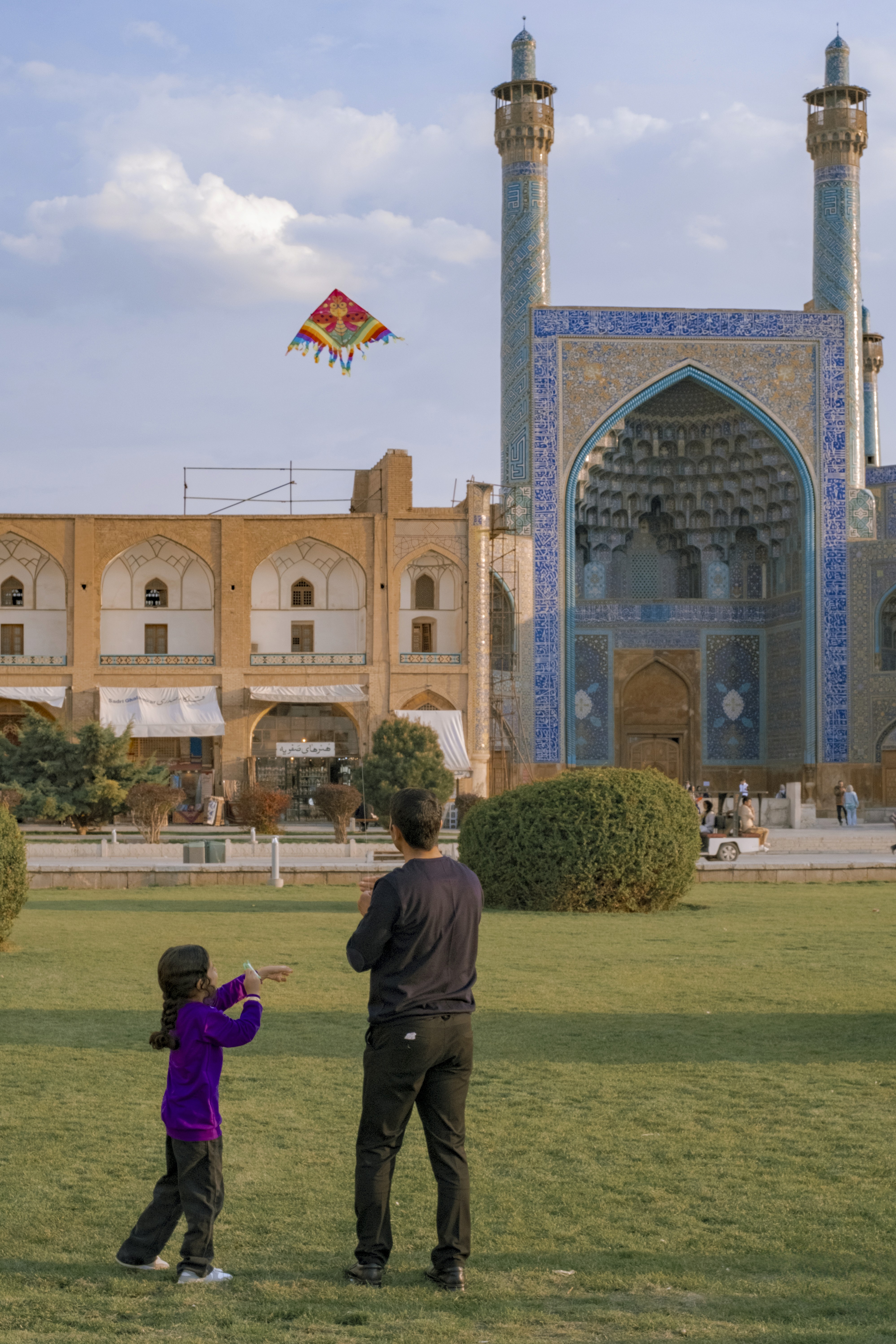
Kite (Fujifilm X-pro3 + Simera 35mm f/1.4)
This photo captures a tender moment between a father and daughter in Isfahan's historic Naghsh-e Jahan Square. They are immersed in the simple joy of flying colorful kites, the vibrant colors of the kites contrasting sharply with the intricate blue tiles of the mosque and the warm tones of the surrounding architecture. The Thypoch lens performs excellently here, with its outstanding color rendering bringing the scene to life, enhancing the vibrancy and contrast of the image. The lens's ability to faithfully capture these colors makes this moment even more enchanting—where grand history beautifully merges with the simplicity of everyday life.
Find Amirhossein Darafsheh on Instagram:https://www.instagram.com/daarafsh/
Purchase Simera 35mm f/1.4 at the Thypoch store:https://www.thypoch.store/products